
RV Safety Gear Every Camper Should Carry
RV safety gear every camper should carry should help you prepare for common travel problems without making your RV feel overloaded with unnecessary equipment. The right essentials can help you respond to power outages, roadside stops, minor injuries, fire risks, and potentially dangerous gas conditions while traveling.
RV Safety Gear Every Camper Should Carry: 5 Essentials
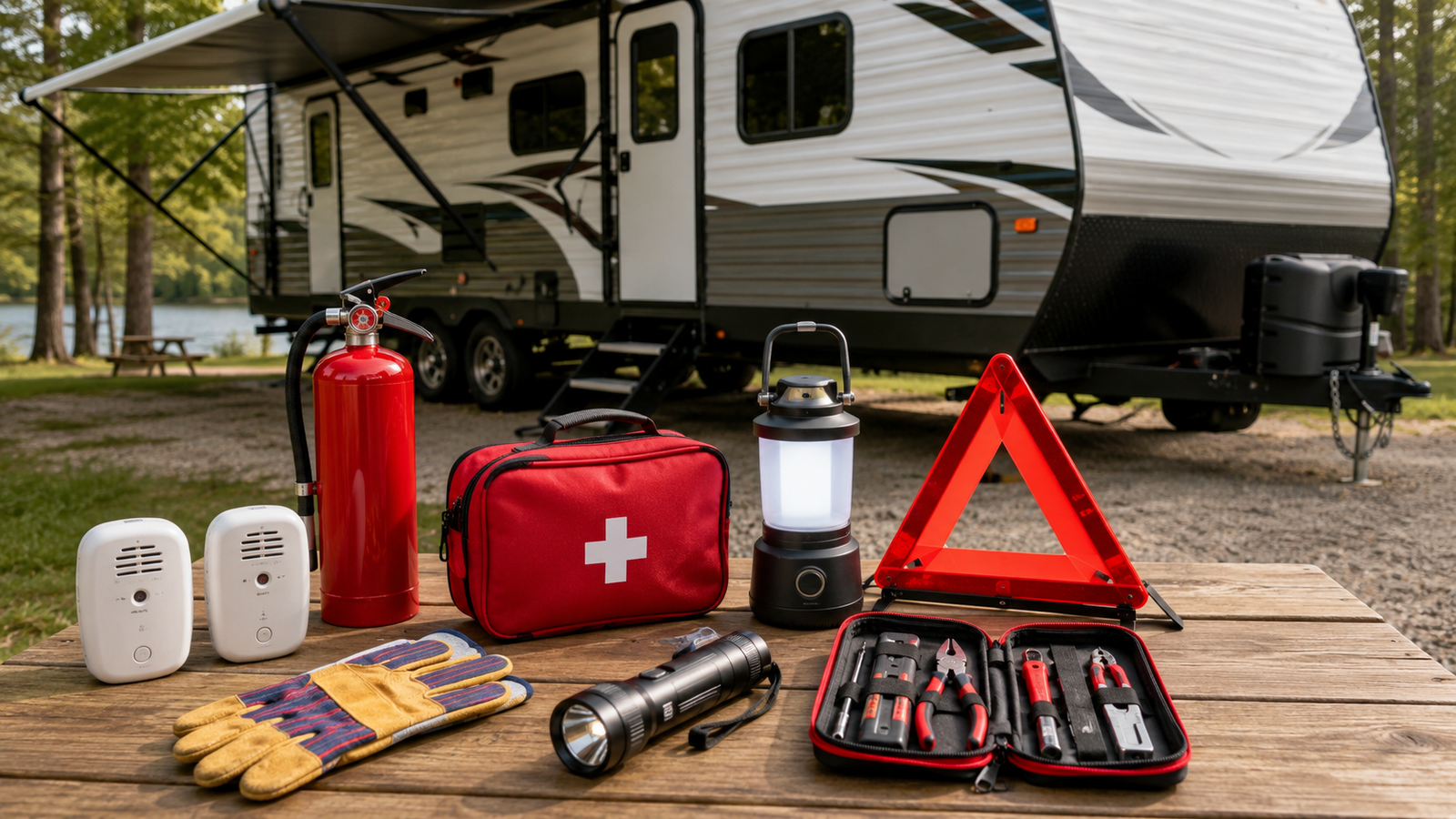
A practical RV safety kit should cover the situations most likely to interrupt a trip or create an urgent problem. Start with equipment that helps detect gas hazards, respond to a small fire, handle minor injuries, provide light during an outage, and improve visibility during a roadside stop.
1. CO and Propane Alarms
Carbon monoxide and propane alarms help alert RV occupants to potentially dangerous conditions that may not be obvious right away. Check the manufacture date, test the alarms regularly, and replace any unit that is expired, damaged, or not operating correctly. When choosing a replacement, use the information printed on the existing alarm and confirm that the new unit is appropriate for your RV.
2. Fire Extinguishers
An RV fire extinguisher should be easy to reach and appropriate for the area where it will be carried. Check that the pressure indicator is in the proper range, inspect the extinguisher for damage or corrosion, and make sure everyone traveling in the RV knows where it is located. Replace any extinguisher that is expired, discharged, or otherwise unserviceable.
3. First Aid Kits
A well-stocked first aid kit can help with common minor injuries until additional care is available. Choose a kit sized for the number of people traveling, the length of the trip, and how far you may be from medical services. Check the contents before each trip and replace any used, damaged, or expired supplies.
4. Emergency Lighting
Portable and rechargeable emergency lighting can help during campground power outages, nighttime setup, roadside stops, and unexpected repairs. Carry at least one light that can remain hands-free, along with a dependable flashlight. Recharge or replace the batteries before each trip and store the lights where they can be reached easily in the dark.
5. Roadside & Emergency Gear
Roadside and emergency gear can help make an unexpected stop safer and easier to manage. Carry reflective warning triangles, a dependable flashlight, work gloves, and a compact emergency tool kit. Store these items where they can be reached without unloading the RV, and inspect them before each trip so missing or damaged gear can be replaced.
How to Choose the Right Safety Gear for Your RV
Choose safety gear based on your RV, how you travel, and where each item will be stored. A replacement alarm must match the application, a fire extinguisher must be appropriate for its location, and emergency gear should remain accessible when you need it. Avoid buying equipment only because it is inexpensive or included in a generic kit; the wrong item can create false confidence without solving the actual safety need.
RV safety gear every camper should carry also needs regular inspection after it is purchased. Test alarms, check extinguisher condition, review first aid supplies, charge emergency lights, and confirm that roadside equipment remains complete and accessible. A quick inspection before each trip helps uncover expired supplies, weak batteries, missing tools, or equipment that has been damaged while stored. Keep a simple checklist with your travel-preparation routine so these safety items are reviewed before leaving home.
Get Help Choosing RV Safety Gear
Choosing the right RV safety gear every camper should carry depends on your RV, travel plans, and the situations you want to prepare for. Tell us your RV year, make, and model, where the equipment will be used, and any specific concerns you want to prepare for. The Parts Department can help narrow the options before you request a quote.