
30 Amp vs 50 Amp RV Surge Protectors: Which One Do You Need?
30 Amp vs 50 Amp RV Surge Protectors are made for different RV electrical systems, so choosing the correct amperage matters. This guide explains how to identify your RV’s power service, understand the main differences between 30-amp and 50-amp protection, and choose the right surge protector before connecting to campground power.
30 Amp vs 50 Amp RV Surge Protectors: Quick Comparison
30 Amp RV Surge Protectors
Choose a 30-amp surge protector when your RV’s shore-power connection is 30 amp. Southwire’s 30-amp portable power-protection products are designed for 120V, 30A service. The protector should match the amperage of the RV’s power cord and inlet—not simply the receptacle available at the campsite.
50 Amp RV Surge Protectors
Choose a 50-amp surge protector when your RV’s shore-power connection is 50 amp. Southwire’s 50-amp portable power-protection products are designed for 120/240V, 50A service. The protector should match the amperage of the RV’s power cord and inlet—not simply the receptacle available at the campsite.
How to Tell Whether Your RV Is 30 Amp or 50 Amp
The safest way to identify your RV’s electrical service is to check the shore-power cord, RV power inlet, or main electrical panel for a 30A or 50A marking. Match the surge protector to the RV’s rated service. Do not choose based only on which outlet is available on the campground pedestal.
Check the Shore-Power Plug and RV Inlet
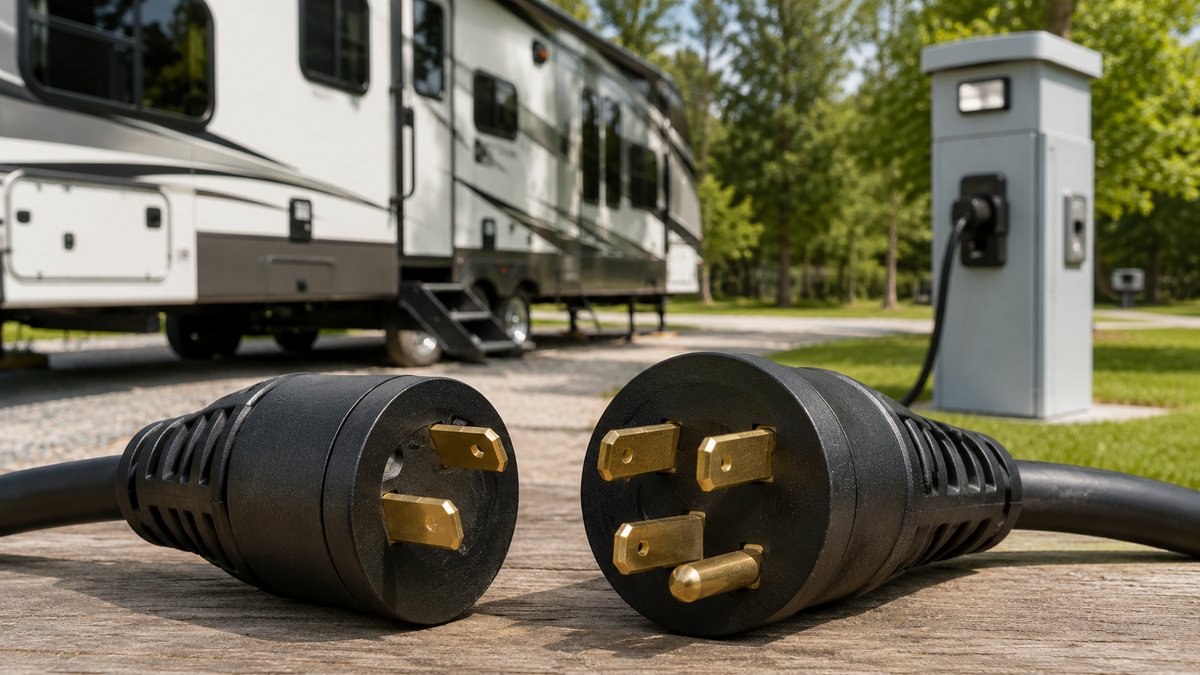
A typical 30-amp RV shore-power plug has three prongs, while a typical 50-amp RV plug has four. Also check the RV inlet or cord label for a 30A or 50A marking. If an adapter is installed, identify the RV’s actual service from the original inlet, power cord, or electrical panel rather than the adapter.
Check the Main Electrical Panel
Check the visible main-breaker rating inside the RV’s electrical distribution panel. A 30-amp RV typically has a single 30A main breaker, while a 50-amp RV typically has a two-pole 50A main breaker. Only inspect the visible labels—do not remove electrical-panel covers. When the markings are unclear, confirm the RV’s service through the owner’s manual or a qualified RV technician.
Check the Owner’s Manual or RV Data Label
The owner’s manual, electrical specifications, or RV data label may identify the unit as 30 amp or 50 amp. When those sources are unclear or unavailable, use the original shore-power cord, RV inlet, and main-breaker rating together to confirm the correct service before purchasing a surge protector.
What Happens If You Choose the Wrong Amperage?
A surge protector with the wrong amperage may not connect directly to the RV’s shore-power cord or inlet. Although a properly rated adapter can sometimes make a physical connection possible, the adapter does not change the RV’s electrical service or increase the power available to it. Match the surge protector to the RV’s original 30-amp or 50-amp service to avoid confusion and ensure the correct protection setup.
Amperage and Protection Level Are Separate Decisions
Choosing 30 amp or 50 amp answers the connection and compatibility question. Choosing a protection level answers which electrical problems the device can detect or disconnect for. Southwire offers products with different diagnostics and protection capabilities, so two surge protectors with the same amperage may not provide the same features. After confirming your RV’s service, compare features such as pedestal-wiring diagnostics, high- and low-voltage protection, open-neutral and open-ground protection, time delay, and surge suppression.
Which Level of RV Power Protection Do You Need?
After confirming whether your RV uses 30-amp or 50-amp service, compare the protection level. Southwire offers portable models ranging from pedestal-wiring diagnostics and surge protection, to enhanced diagnostics, to full protection that can disconnect power during high- or low-voltage conditions and other electrical faults. The right level depends on whether you mainly want wiring and surge checks or broader automatic protection from campground-power problems.
Basic Pedestal Diagnostics and Surge Protection
This level is best for RV owners who want a straightforward check of campground pedestal wiring plus surge protection. Southwire models 44260 and 44270 use indicator lights to show power status and test for open ground, open neutral, and correct polarity. The 30-amp model provides 2,100 joules of surge protection, while the 50-amp model provides 4,200 joules. These models diagnose wiring conditions but do not provide the broader automatic high- and low-voltage disconnection found in full-protection models.
Enhanced Diagnostics and Surge Protection
This level is suited to RV owners who want more detailed fault information and overheating detection without moving to a full automatic-disconnection model. Southwire models 44280 and 44380 provide 30-amp protection with 2,100 joules, while models 44290 and 44390 provide 50-amp protection with 4,200 joules. These models indicate open neutral, open ground, reverse polarity, no power, surge-protection status, and an overheating plug or receptacle. The 50-amp models also indicate a missing voltage leg. Models 44380 and 44390 are UL/CUL listed and include a fully enclosed receptacle cover.
Full Automatic Power Protection
This level is designed for RV owners who want broader automatic protection from faulty campground power. Southwire models 34931 and 34951 protect against power surges, open ground, open neutral, reverse polarity, miswired pedestals, high- and low-voltage conditions, and an overheating plug or receptacle. The 50-amp model also protects against high neutral current. These models automatically reset when acceptable power returns, include a 128-second reset delay to protect the air-conditioner compressor, and use an LCD display for voltage, current, and fault information. Model 34931 is rated for 120V, 30A with 2,450 joules, while model 34951 is rated for 120/240V, 50A with 4,200 joules.
Recommended 30 Amp and 50 Amp RV Surge Protectors
Southwire Surge Guard 34931 – 30 Amp Full Protection
Choose the Southwire Surge Guard 34931 for an RV with 30-amp shore power when you want full automatic protection. It is rated for 120V, 30A and provides 2,450 joules of surge suppression, an LCD display, automatic reset, and a 128-second delay that helps protect the air-conditioner compressor.
Southwire Surge Guard 34951 – 50 Amp Full Protection
Choose the Southwire Surge Guard 34951 for an RV with 50-amp shore power when you want full automatic protection. It is rated for 120/240V, 50A and provides 4,200 joules of surge suppression, an LCD display, automatic reset, and a 128-second delay that helps protect the air-conditioner compressor.
Before You Plug In, Use the RV Power Protection Checklist
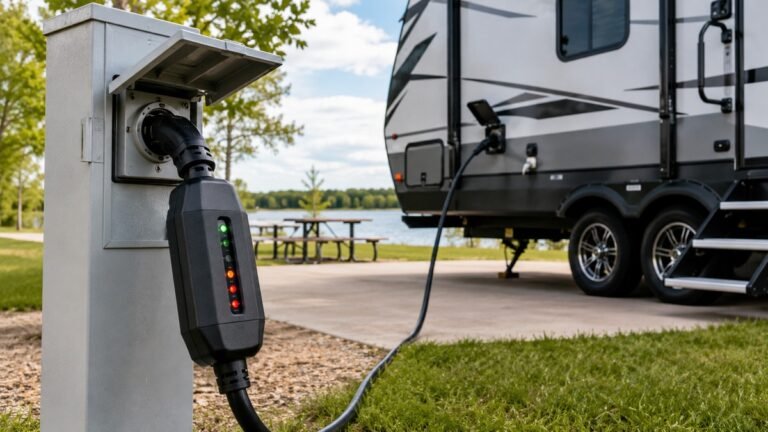
Choosing the correct amperage is only the first step. Before connecting at a campsite, inspect the pedestal, confirm the protector’s diagnostic results, and allow any built-in reset delay to finish. Follow the RV Power Protection Checklist Before Plugging Into Campground Power for the complete seven-step hookup process.
Choosing between 30 Amp vs 50 Amp RV Surge Protectors comes down to matching the protector to your RV’s electrical service.
Planning a campground trip? Visit our RV Trip-Ready Essentials guide for help reviewing power protection, safety gear, leveling, and emergency-prep items before you leave.
Need Help Choosing the Right RV Surge Protector?
Not sure whether your RV uses 30-amp or 50-amp service, or which protection level fits your setup? Send us your RV details and we’ll help you choose the correct Southwire Surge Guard model before you order.
One Comment
Comments are closed.